
Can You Change Your Personality?

Throughout our Big Five at Work series, we’ve explained why personality is one of the most powerful predictors of workplace outcomes, from job performance to leadership effectiveness. That naturally raises a question we hear often from leaders and the people who develop them: If personality shapes so much of how we show up at work, can people actually change it?
The encouraging answer from decades of research is “Yes.” Personality is stable, but it is not fixed. With the right conditions, people can change their personality, and understanding how that happens is the key to developing your employees.
The 3 Components of Personality Change
Personality is our most natural way of thinking, feeling, and acting. Those three components, which psychologists call cognition, affect, and behavior, are interconnected. Change one, and you exert pressure on the other two.
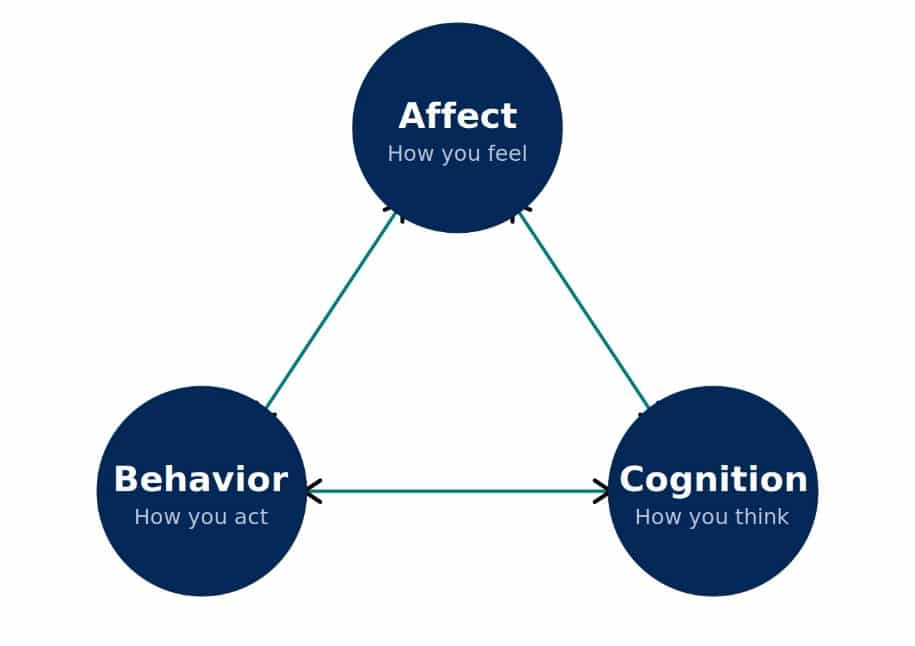
How Personality Change Happens
A trait is your most natural way of thinking, feeling, and acting. A state is a momentary expression of that tendency: how you are thinking, feeling, and behaving in a specific situation, which naturally fluctuates around your trait baseline.
Lasting change happens gradually, but it doesn’t take as long as you might think. When you repeatedly push your states in a new direction, those transient expressions slowly accumulate into new habits. With enough time and repetition, habits crystallize into a new trait level. Personality traits are stable until, through sustained effort, they aren’t. This isn’t an overnight shift, but it can happen in as little as a few months.

Why Personality Change Feels Uncomfortable (and Why That’s the Point)
There’s a reason meaningful change is hard. Before an intervention, your states hover around your existing trait in a comfortable equilibrium. Deliberately acting in ways that don’t come naturally opens a gap between your natural trait and your intentional developmental states. This state-trait discrepancy simply feels uncomfortable.

That discomfort is not a sign something is wrong. It is the engine of change. The more consistently you tolerate the mismatch and keep practicing the new behavior, the faster new habits form, until a new baseline settles into place as the next comfort zone. Doing things that don’t come naturally is uncomfortable, but that’s exactly how new habits, and eventually new traits, take hold.
4 Developmental Activities That Drive Personality Change
- Discrepancy awareness. Exploring the difference between your current and desired self fuels the motivation to change and makes it feel worth pursuing.
- Activating strengths. Building your development plan around your existing traits, motivations, skills, interests, and relationships creates positive feedback loops that sustain momentum.
- Action. Pushing yourself outside your comfort zone by learning and practicing genuinely new behaviors.
- Reflection. Exploring your assumptions, motivations, and expectations, and making new connections about yourself, others, and your experiences.
5 Things Successful Personality Changers Do Differently
Not everyone who attempts change succeeds. Those who make significant, lasting changes tend to share five things:
- They are highly motivated and committed to changing.
- They expect success. They genuinely believe they can change and reach their goals.
- They engage in many developmental activities rather than just one.
- They complete difficult activities, well outside their comfort zone.
- They enjoy the process, finding the activities genuinely rewarding.
Personality Change Across the Big Five Traits
Change is possible across all 5 domains, although some are easier to change than others.
- Extraversion. While those who are very introverted may not think so, this is the easiest one to change. Engaging in repeated patterns of social behavior accompanied by positive emotions gradually shifts the baseline. Start in settings that are more likely to be a positive experience for you, then work your way up to social interactions where the outcome is less certain.
- Openness/Intellect. Repeated engagement with new ideas, perspectives, and environments increases the probability of attending to novel stimuli, building upon them, and deriving meaning from them in the future.
- Steadiness. Repeated modifications of affective states can recalibrate the thresholds, intensity, and duration of emotional responses.
- Conscientiousness. Repeated enactments of goal-directed behaviors recalibrate how you initiate tasks, sustain productivity, and inhibit unproductive actions.
- Agreeableness. This is the hardest one to change, but it is possible. Repeated engagement in cooperative behavior and empathic responses increases the likelihood of prosocial action in the future, and repeated benevolent interpretations of others’ intentions strengthen tendencies to perceive social situations in less adversarial ways.
Practical Implications for HR Leaders
Personality is stable enough to measure and predict, and malleable enough to develop. For organizations, that reframes an accurate, science-based read on someone’s traits not as a verdict, but as a starting point. A few practical implications follow:
- Hiring and promotion. Use a psychometrically sound personality survey that fully measures the Big Five traits, so you understand where a candidate naturally fits, where they’ll need to stretch, and how large the gap is between their natural personality and what the role requires.
- Leadership development. Lasting change is gradual and changes are incremental. Frame development around milestones and realistic timelines and ensure that there is a way to measure progress. Emphasize the importance of motivation, optimism, practice, and challenge, and encourage them to craft activities that they enjoy. For instance, someone low on the Proactivity aspect of Extraversion and high on the Compassion aspect of Agreeableness might take on a leadership role for a social event that your organization is hosting to support a local charity.
- Coaching. Build plans around the four developmental activities: create discrepancy awareness, activate existing strengths, drive deliberate action outside the comfort zone, and structure reflection. Normalize the discomfort of the state-trait mismatch so leaders recognize it as progress, not failure.
References
Title is paraphrased from: Bleidorn, W., Haehner, P., Krämer, M. D., Wright, A. J., & Hopwood, C. J. (2026, April 18). Four change factors are taken from: Allemand, M., Olaru, G., Stieger, M., & Flückiger, C. (2024).
Change graph and some of the five things are taken from: Olaru, G., Stieger, M. Flückiger, C., Roberts, B. W., & Allemand (2026).
To see how PCI measures personality the right way and turns it into targeted development, reach out to our team.

Deborah Bell, M.A., SHRM-SCP